


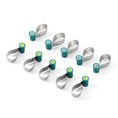


Hey there, fellow dental enthusiasts! Today, I'm super stoked to chat about one of the unsung heroes in the world of composite fillings: dental matrix bands. As a dental matrix bands supplier, I've seen firsthand how these little guys can make a huge difference in the quality of composite fillings. So, let's dive right in and explore what their role is in this important dental procedure.
What Are Dental Matrix Bands Anyway?
First things first, let's get on the same page about what dental matrix bands are. In simple terms, they're thin, flexible strips made from materials like stainless steel, mylar, or other specialized polymers. These bands are shaped to fit around a tooth, creating a temporary "wall" or mold. Think of them as the framework that holds the composite material in place while it's being applied and set.
The Key Role in Restoring Tooth Anatomy
One of the main jobs of dental matrix bands in composite fillings is to help restore the natural shape and anatomy of the tooth. When a tooth has a cavity or some other form of damage, the natural contours are often lost. Composite fillings are used to replace the missing tooth structure, but without a proper matrix band, it can be really tough to get the right shape.
The matrix band acts as a guide, allowing the dentist to pack the composite resin into the prepared cavity in a way that mimics the original tooth shape. This is crucial for several reasons. For starters, a tooth with the correct anatomy functions better. It can chew food properly and distribute the forces evenly across the tooth surface, which helps prevent future damage.
Ensuring a Tight Seal
Another super important role of dental matrix bands is to create a tight seal between the composite filling and the tooth. When the matrix band is placed correctly, it presses against the tooth, closing any gaps between the filling material and the tooth structure. This is essential because if there are gaps, bacteria can get in and cause secondary decay.
A tight seal also helps prevent leakage of the composite material. You don't want the resin to seep out into the surrounding tissues or the gum line. The matrix band keeps everything in place, ensuring that the filling stays where it's supposed to and that the tooth is properly protected.
Working in Harmony with Dental Wedges
Now, let's talk about how dental matrix bands work hand in hand with Dental Wedges. Dental wedges are small, triangular pieces that are placed between the teeth next to the tooth being filled. They serve a few different purposes.
First, they help hold the matrix band in place. By wedging the band firmly against the tooth, they ensure that it doesn't move around during the filling process. This stability is key for getting a good, even filling.
Second, dental wedges help separate the teeth slightly. This creates a little bit of space for the matrix band and the composite material, making it easier to work in the area. It also helps prevent the filling from bonding to the adjacent tooth, which could cause problems later on.
The Impact on Aesthetics
Aesthetics are a big deal in modern dentistry, and dental matrix bands play a role here too. When the composite filling is shaped correctly using a matrix band, it looks more natural. The color and translucency of the composite can be matched to the surrounding teeth, and with the right shape, the filling becomes almost invisible.
This is especially important for front teeth or teeth that are visible when you smile. Patients want their teeth to look good, and a well-placed matrix band can make all the difference in achieving that aesthetically pleasing result.
Choosing the Right Matrix Band
As a supplier, I know that there are different types of dental matrix bands available, and choosing the right one is crucial. The choice depends on several factors, such as the location of the cavity, the size of the filling, and the dentist's personal preference.
Stainless steel matrix bands are really popular because they're strong and durable. They can withstand the pressure of packing the composite resin and are great for larger fillings. Mylar matrix bands, on the other hand, are more flexible and are often used for anterior teeth or smaller fillings where a more delicate touch is needed.
Maintaining the Matrix Band
Proper maintenance of dental matrix bands is also important. After each use, they need to be cleaned and sterilized to prevent the spread of bacteria. If a matrix band is damaged or worn out, it won't work as effectively, so it's important to replace it when necessary.
Complementary Tools: HP Flat Prophy Brush and Dental Polishing Brush Wheel
Once the composite filling is in place and the matrix band is removed, there are other tools that come into play to finish the job. HP Flat Prophy Brush and Dental Polishing Brush Wheel are two such tools.
The HP Flat Prophy Brush is great for cleaning the surface of the filling. It can remove any debris or excess composite material that might be left behind. The brush's flat design allows it to reach into different areas of the tooth easily, ensuring a thorough clean.
The Dental Polishing Brush Wheel, on the other hand, is used to give the filling a smooth and shiny finish. A polished filling not only looks better but also resists staining and plaque buildup. It makes the filling blend in even more with the natural tooth surface.
Why You Should Consider Our Dental Matrix Bands
As a dental matrix bands supplier, I can tell you that our products are top-notch. We've put a lot of time and effort into developing matrix bands that are easy to use, durable, and effective. Our bands are designed to provide the best possible results for both the dentist and the patient.
We offer a wide range of matrix bands to suit different needs. Whether you're working on a small cavity in a front tooth or a large filling in a molar, we've got the right matrix band for you. And our prices are competitive, so you can get high-quality products without breaking the bank.


Let's Connect and Talk Business
If you're a dentist, a dental hygienist, or anyone involved in the dental industry, I'd love to hear from you. Whether you have questions about our dental matrix bands, need help choosing the right product, or are interested in placing an order, don't hesitate to reach out. We're here to support you and make sure you have the best tools for the job.
References
- Cohen, S., Hargreaves, K. M., & Berman, L. (2019). Pathways of the Pulp. Elsevier.
- Phillips, R. W., & Garcia-Godoy, F. (2017). Dental Materials: Science and Clinical Applications. Elsevier.
- Sturdevant, J. R., Robbins, J. W., Miller, C. S., & Palenik, C. J. (2014). Sturdevant's Art and Science of Operative Dentistry. Elsevier.