


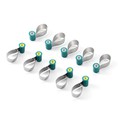


Hey there, fellow dental enthusiasts! As a dental matrix bands supplier, I've had my fair share of conversations about the ins and outs of these handy tools. Today, I want to dive deep into the topic of what's the best way to remove dental matrix bands.
First off, let's quickly touch on what dental matrix bands are. They're an essential part of dental restorations. These bands create a temporary wall around the tooth being restored, helping to shape the filling material and ensure a proper contour. You can check out our range of Dental Matrix Bands to get an idea of the different types available.
Now, onto the main event - removing these bands. There are a few methods out there, but not all are created equal. Let's break them down and see which one stands out as the best.
The Traditional Way
The most common method of removing dental matrix bands is using a matrix band remover. This is a simple, straightforward tool that's been around for ages. You place the remover on the band, usually at the point where it's wrapped around the tooth, and then gently squeeze. The remover grips the band and allows you to pull it off the tooth.
The advantage of this method is its simplicity. It doesn't require a lot of training or fancy equipment. Just a basic understanding of how to use the remover, and you're good to go. However, it does have its drawbacks. Sometimes, the remover can slip, especially if the band is tightly wrapped around the tooth. This can cause damage to the restoration or even the tooth itself. Also, if you're not careful, you might end up pulling the band too hard, which can distort it, making it unusable for future procedures.
The Scissor Method
Another method I've seen used is the scissor method. Some dentists use a pair of sharp scissors to cut the band at one end and then peel it off the tooth. This can be effective, especially if the band is difficult to remove using a traditional remover.
The scissor method gives you more control over the removal process. You can cut the band at a specific point, which can make it easier to peel off. However, it also has some risks. Cutting the band can create sharp edges, which can scratch the tooth or the restoration. And just like with the remover, if you're not careful, you can damage the tooth or the band.
The Floss Method
Now, here's a method that might sound a bit unconventional, but it can be surprisingly effective - the floss method. You take a piece of dental floss and thread it under the band at one end. Then, you gently pull the floss back and forth, like you're sawing through the band. As you do this, the floss gradually cuts through the band, allowing you to remove it.
The floss method is great because it's gentle on the tooth and the restoration. It doesn't create sharp edges like the scissor method, and it's less likely to damage the band. However, it can be time-consuming, especially if the band is thick or tightly wrapped.


The Best Way?
So, after all these methods, which one is the best? Well, it really depends on the situation. In most cases, I'd recommend starting with the traditional matrix band remover. It's the simplest and most commonly used method, and it works well for most bands. If the band is difficult to remove using the remover, you can try the scissor method or the floss method. Just make sure you're careful and take your time.
It's also important to note that proper technique is key, no matter which method you choose. Make sure you're using the right amount of force and that you're not putting too much pressure on the tooth or the restoration. And always follow the manufacturer's instructions for your dental matrix bands and removal tools.
Other Related Products
While we're on the topic of dental restorations, I also want to mention a couple of other products that can be useful. Our HP Flat Prophy Brush is great for cleaning the tooth before and after the restoration process. It helps to remove plaque and debris, ensuring a clean surface for the filling material.
And then there are our Wood Matrix Wedges. These wedges are used to hold the matrix band in place during the restoration. They help to create a tight seal between the band and the tooth, which is essential for a successful restoration.
Let's Talk Business
If you're in the market for dental matrix bands or any of our other products, I'd love to hear from you. We're a reliable supplier with a wide range of high-quality products. Whether you're a small dental clinic or a large hospital, we can meet your needs. Just reach out to us, and we can start a conversation about your requirements. We're always happy to help and provide you with the best products at competitive prices.
References
- Dental Restorative Materials: Principles and Practice, 3rd Edition
- Journal of Dental Research, various issues on dental restorations and matrix band use
So, there you have it - a comprehensive look at the best ways to remove dental matrix bands. I hope this information has been helpful to you. If you have any questions or comments, feel free to leave them below.