


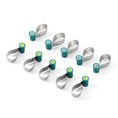


The optimal utilization of dental wedges is a crucial aspect of dental care that significantly impacts the effectiveness of various dental procedures. As a reputable supplier of high - quality dental wedges, I am here to delve into the details of when it is most appropriate to use these essential tools.
During Interproximal Cleaning
One of the primary scenarios where dental wedges shine is during interproximal cleaning. The spaces between teeth are notoriously difficult to clean thoroughly. Plaque and debris tend to accumulate in these areas, leading to the development of cavities and gum diseases. Dental wedges can be inserted gently between the teeth. Their tapered shape allows them to fit snugly into the interproximal spaces, dislodging plaque and food particles. When patients visit the dental clinic for a routine cleaning, hygienists often use dental wedges after scaling to ensure that all the hard - to - reach areas are completely clean. This not only helps in preventing dental caries but also promotes better gum health. For instance, if a patient has tight contacts between their teeth, a dental wedge can be used to slightly separate the teeth for a more effective cleaning. This way, dental professionals can access areas that might otherwise be missed by a toothbrush or dental floss.
In Restorative Dentistry
Restorative dentistry procedures, such as fillings and crown placements, also benefit greatly from the use of dental wedges. When a dentist is preparing a tooth for a filling, they need to isolate the area to prevent saliva and moisture from interfering with the bonding process. Dental wedges can be placed adjacent to the tooth being treated. They act as a physical barrier, keeping the area dry and clean. This is especially important when using composite resin fillings, as moisture can compromise the bond strength between the filling material and the tooth structure. Moreover, dental wedges can help in restoring the proper contact between adjacent teeth. After a filling or a crown is placed, it is essential that the teeth fit together correctly to ensure normal chewing function and prevent food impaction. Dental wedges can be used to adjust the contact points, ensuring that the restored tooth fits seamlessly with its neighbors.
For Gingival Retraction
Gingival retraction is a critical step in many dental procedures, including impression taking for crowns and bridges. Dental wedges can be used to gently displace the gingival tissue away from the tooth surface. This provides a clear view of the tooth's margin, allowing for accurate impressions. By using dental wedges, dental professionals can avoid over - retraction, which can cause damage to the gingiva. The wedges are designed to be soft enough to be comfortable for the patient while still being effective in retracting the gingival tissue. For example, in cases where a patient has a deep sub - gingival margin, dental wedges can be used to gradually move the gingiva to expose the margin for a more accurate impression.
Post - Extraction Care
After a tooth extraction, the socket needs to heal properly to prevent complications such as dry socket and infection. Dental wedges can be used in post - extraction care. They can be placed in the socket to help control bleeding. The absorbent nature of some dental wedges allows them to soak up blood and promote clot formation. Additionally, dental wedges can act as a physical barrier, protecting the socket from food particles and debris. This helps in creating an optimal environment for healing. Patients can be instructed to keep the dental wedge in place for a short period after the extraction, following the dentist's advice.
In Orthodontic Treatments
Orthodontic patients often face unique oral hygiene challenges. Braces and other orthodontic appliances create additional spaces and crevices where plaque can accumulate. Dental wedges can be used to clean these hard - to - reach areas. They can be inserted between the brackets and the teeth, helping to remove plaque and food debris. This is essential for maintaining good oral hygiene during orthodontic treatment, as poor oral hygiene can lead to decalcification of the teeth and gum inflammation. For example, patients with lingual braces, which are attached to the back of the teeth, may find it particularly difficult to clean the interproximal areas. Dental wedges can provide an effective solution, ensuring that these areas are kept clean and healthy.
When Using Other Dental Products
Dental wedges can also be used in conjunction with other dental products. For example, they can be used along with Dental Polishing Brush Wheel. After a dental cleaning, the polishing brush wheel can be used to smooth the tooth surface and remove any remaining stains. Dental wedges can be placed between the teeth to protect the neighboring teeth during the polishing process. Similarly, when using HP Flat Prophy Brush, dental wedges can help in isolating the area being polished, ensuring a more efficient and targeted cleaning.


Factors to Consider When Using Dental Wedges
While dental wedges are versatile and useful tools, there are several factors to consider when using them. The size and shape of the dental wedge should be appropriate for the specific procedure and the patient's oral anatomy. For example, a smaller wedge may be required for a child's teeth, while a larger wedge may be needed for an adult with wider interproximal spaces. The material of the dental wedge is also important. Some wedges are made of cellulose, which is absorbent and biodegradable, while others are made of synthetic materials. The dentist or dental hygienist should choose the material based on the specific requirements of the procedure, such as the need for moisture absorption or gingival retraction.
Conclusion
In conclusion, dental wedges are indispensable tools in modern dentistry. They play a vital role in various dental procedures, from routine cleanings to complex restorative treatments. Whether it is for interproximal cleaning, restorative dentistry, gingival retraction, post - extraction care, or orthodontic treatment, dental wedges offer numerous benefits. As a supplier of Dental Wedges, we are committed to providing high - quality products that meet the diverse needs of dental professionals. If you are interested in learning more about our dental wedges or would like to discuss your specific requirements, we invite you to reach out to us. We look forward to the opportunity to engage in a productive conversation about how our products can enhance your dental practice.
References
- Fejerskov, O., & Kidd, E. A. M. (2008). Dental caries: The disease and its clinical management. Wiley - Blackwell.
- Cohen, S., Hargreaves, K. M., & Burns, R. C. (2018). Pathways of the pulp. Elsevier.
- Proffit, W. R., Fields, H. W., & Sarver, D. M. (2013). Contemporary orthodontics. Elsevier.