




Hey there! As a supplier of needles and syringes, I've seen firsthand how these simple yet crucial medical tools work. In this blog, I'll break down the functions of different parts of a needle and syringe, so you can understand how they contribute to various medical and dental procedures.

The Syringe Barrel
Let's start with the syringe barrel. This is the main body of the syringe, usually made of plastic or glass. It's where the liquid or medication is held before it's administered. The barrel has markings on the side, which are super important. These markings help healthcare providers measure the exact amount of the substance they're using. Whether it's a small dose of insulin for a diabetic patient or a larger volume of a local anesthetic in a dental procedure, those markings ensure accuracy.
Think about it like a measuring cup in your kitchen. If you're baking a cake and the recipe calls for a specific amount of milk, you'd use the markings on the measuring cup to get it right. Similarly, the markings on the syringe barrel are essential for getting the correct dosage of medication.
The Piston
Inside the barrel, there's the piston. It's like a little plunger that moves up and down. When you pull the piston back, it creates a vacuum inside the barrel. This vacuum sucks the liquid or medication into the syringe through the needle. It's kind of like using a straw to drink a milkshake. When you suck on the straw, you create a low - pressure area, and the milkshake gets drawn up into the straw.
On the other hand, when you push the piston forward, it forces the liquid out of the syringe through the needle. This is how the medication is delivered to the patient. In dental procedures, for example, the piston is used to inject anesthetic into the gums. The smooth movement of the piston is crucial for a controlled and steady flow of the substance.
The Needle Hub
Now, let's talk about the needle hub. This is the part that connects the needle to the syringe barrel. It's designed to create a secure and leak - proof connection. A good needle hub ensures that there's no spillage of the medication during the filling or injection process.
There are different types of needle hubs. Some are designed to be easily attached and detached, which is great for quick changes, especially in a busy medical or dental setting. For instance, in a dental clinic, a dentist might need to switch between different types of Dental Syringe Tips depending on the procedure. The needle hub allows for these quick and hassle - free changes.
The Needle Shaft
The needle shaft is the long, thin part of the needle that actually pierces the skin or tissue. Its length and gauge are important factors. The length of the needle is chosen based on the depth at which the medication needs to be delivered. For example, a shorter needle might be used for a subcutaneous injection (just under the skin), while a longer needle could be required for an intramuscular injection.
The gauge of the needle refers to its thickness. A smaller gauge number means a thicker needle. Thicker needles are often used when a larger volume of medication needs to be delivered quickly or when the medication is viscous. In dental work, different gauges of needles are used for different procedures. A thinner needle might be used for a more precise injection in a sensitive area, like around the teeth.
The Needle Bevel
At the tip of the needle, there's the bevel. The bevel is the slanted part of the needle tip. Its shape and angle are carefully designed. A sharp bevel makes it easier for the needle to penetrate the skin or tissue with minimal pain. It's like using a sharp knife to cut through a piece of paper. A dull knife would tear the paper, causing more damage, while a sharp one cuts smoothly.
In dental procedures, a well - designed bevel is crucial. When injecting anesthetic near the teeth or gums, a sharp bevel reduces discomfort for the patient. It also helps in accurate placement of the medication, which is important for effective pain management during dental work.
Specialized Dental Syringes
In the dental field, there are some specialized syringes. For example, the Dental Irrigation Syringe is used for cleaning and irrigating the oral cavity. It can be filled with a cleaning solution, and the liquid is forced out through the needle to clean around the teeth, gums, and in dental implants.
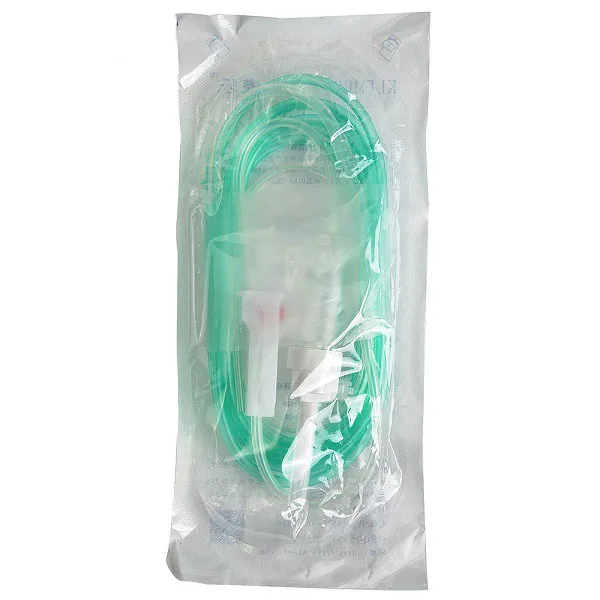
The Dental Implant Irrigation Tubing is another important part. It's often used in conjunction with the dental irrigation syringe. The tubing allows for a more targeted and controlled flow of the irrigation solution to the specific areas around dental implants, helping to keep them clean and free from infection.
Conclusion
So, as you can see, each part of a needle and syringe plays a vital role in the delivery of medications and in various medical and dental procedures. From the barrel that holds the medication to the bevel that makes a smooth entry, every component is carefully designed.
If you're in the medical or dental industry and are looking for high - quality needles and syringes, we're here to help. We offer a wide range of products, including the specialized dental items I've mentioned. Whether you need a simple syringe for a basic injection or a complex dental irrigation system, we've got you covered. Reach out to us to start a conversation about your procurement needs. We're ready to provide you with the best products and solutions for your practice.
References
- Medical Instrumentation: Application and Design by John G. Webster
- Dental Materials and Therapeutics by John Mount and Ralph J. Nelson