


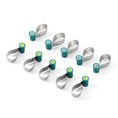


Hey there! As a dental wedges supplier, I'm super excited to share with you all about how dental wedges work. These little tools might seem insignificant at first glance, but they play a huge role in dental procedures. So, let's dive right in!
What Are Dental Wedges?
First things first, let's talk about what dental wedges actually are. Dental wedges are small, triangular-shaped devices made from various materials like plastic, wood, or rubber. They're used in dental restorations, mainly when filling cavities between teeth. You can check out Plastic Dental Wedges on our website to get an idea of the types available.
The Purpose of Dental Wedges
The main purpose of dental wedges is to create a tight contact point between adjacent teeth. When a cavity is filled, it's crucial that the filling material fits snugly against the neighboring tooth. This prevents food particles and bacteria from getting trapped in the space between the teeth, which could lead to further decay.
Another important function is to separate the teeth slightly. This separation helps in placing Dental Matrix Bands more easily. Matrix bands are used to hold the filling material in place while it sets, and having the teeth slightly separated gives more room for proper placement.
How Do They Work?
Placement
When a dentist decides to use a dental wedge, they first clean the area around the cavity. Then, they select the appropriate size and shape of the wedge. The wedge is usually inserted into the interproximal space (the space between two teeth) from the buccal (cheek) or lingual (tongue) side, depending on the location of the cavity.
The triangular shape of the wedge allows it to fit snugly into the space. As it's pushed in, it starts to exert pressure on the adjacent teeth. This pressure is what causes the teeth to separate slightly. It's like using a small wedge to pry open a tight gap.
Creating a Contact Point
Once the wedge is in place, it helps to create a proper contact point between the teeth. The filling material is then placed against the wedge and the tooth surface. As the filling sets, it takes the shape of the space created by the wedge, ensuring a tight fit against the neighboring tooth. This is crucial for the long - term success of the restoration.
Maintaining Isolation
Dental wedges also help in maintaining isolation during the procedure. They can prevent saliva and other fluids from getting into the cavity area. This is important because saliva can interfere with the bonding process of the filling material. By keeping the area dry and isolated, the dentist can ensure a better bond between the filling and the tooth.
Different Types of Dental Wedges and Their Working Mechanisms
Plastic Dental Wedges
Plastic dental wedges are popular because they're lightweight, easy to handle, and come in a variety of colors. They're usually flexible, which allows them to adapt to different tooth shapes and interproximal spaces. When inserted, they gradually expand to fill the space and create the necessary pressure for tooth separation. You can find a great selection of Plastic Dental Wedges on our site.
Wooden Dental Wedges
Wooden wedges have been used in dentistry for a long time. They're known for their natural ability to absorb moisture. When they get wet, they expand slightly, which helps in creating a tighter fit and better separation. However, they're not as durable as plastic wedges and may break or splinter if not handled carefully.
Rubber Dental Wedges
Rubber wedges are highly elastic. They can be compressed easily during insertion and then expand to fill the interproximal space. Their elasticity allows them to conform to the shape of the teeth and provide a consistent pressure for tooth separation.
Factors Affecting the Performance of Dental Wedges
Tooth Anatomy
The shape and alignment of the teeth can greatly affect how dental wedges work. For example, if the teeth are severely crowded or have abnormal shapes, it may be more difficult to insert the wedge properly and achieve the desired separation.
Wedge Size and Shape
Choosing the right size and shape of the wedge is crucial. A wedge that's too small may not create enough pressure for proper separation, while a wedge that's too large can cause excessive force on the teeth, which could be painful for the patient and may even damage the teeth.
Benefits of Using Dental Wedges
Improved Restoration Quality
By creating a proper contact point and maintaining isolation, dental wedges contribute to a higher - quality restoration. This means that the filling is more likely to last longer and provide better protection against further decay.
Patient Comfort
Properly placed dental wedges can reduce the discomfort during the dental procedure. The separation of the teeth makes it easier for the dentist to work, and it also reduces the chances of the filling material getting trapped between the teeth, which could cause pain later.


Conclusion
So, there you have it! Dental wedges are simple yet incredibly important tools in dentistry. They work by creating separation between teeth, establishing proper contact points, and maintaining isolation during restorative procedures. Whether you're a dentist looking for high - quality dental wedges or a dental clinic in need of a reliable supplier, we've got you covered.
If you're interested in purchasing dental wedges or any other dental products like Dental Matrix Bands and Dental Occlusal Pad, feel free to reach out to us. We're always happy to discuss your needs and provide the best solutions for your dental practice.
References
- Cohen, S., & Hargreaves, K. M. (Eds.). (2018). Pathways of the Pulp. Elsevier.
- Fehrenbach, M. J., & Herring, S. W. (2012). Illustrated Anatomy of the Head and Neck. Saunders.