


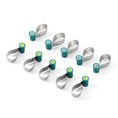


Achieving proper proximal contours in dental restorations is crucial for both the functionality and aesthetics of the teeth. Dental matrix bands play a pivotal role in this process, ensuring that restorations fit seamlessly and function effectively. As a trusted supplier of Dental Matrix Bands, I've witnessed firsthand how these simple yet essential tools can significantly enhance the quality of dental work. In this blog, we'll explore the various ways dental matrix bands contribute to achieving proper proximal contours.
Understanding Proximal Contours
Before delving into the role of dental matrix bands, it's important to understand what proximal contours are and why they matter. Proximal contours refer to the shape and curvature of the tooth surfaces that are adjacent to neighboring teeth. These contours are designed to facilitate proper contact between teeth, which is essential for maintaining the integrity of the dental arch, preventing food impaction, and promoting efficient chewing.
Proper proximal contours also contribute to the overall aesthetics of the smile. Teeth with well-defined proximal contours appear more natural and harmonious, enhancing the patient's appearance. Additionally, they can help to prevent the development of periodontal problems by allowing for effective plaque removal and maintaining healthy gum tissue.
How Dental Matrix Bands Assist in Creating Proximal Contours
1. Providing a Temporary Wall
One of the primary functions of dental matrix bands is to act as a temporary wall during the restoration process. When a tooth has a cavity or other defect, the dentist must remove the damaged tissue and fill the resulting space with a restorative material, such as composite resin or amalgam. Without a matrix band, the restorative material would simply flow out of the cavity, making it impossible to achieve the proper shape and contour.
A dental matrix band is placed around the tooth to create a barrier that holds the restorative material in place. This allows the dentist to shape the material to match the natural contour of the tooth, ensuring a proper fit and optimal function. The matrix band also helps to prevent the restorative material from leaking into the adjacent tooth or gum tissue, reducing the risk of postoperative complications.
2. Shaping the Restoration
In addition to providing a temporary wall, dental matrix bands can also be used to shape the restoration. Matrix bands come in a variety of shapes and sizes, each designed to accommodate different tooth types and restoration needs. By selecting the appropriate matrix band, the dentist can create a restoration that closely mimics the natural shape and contour of the tooth.
For example, a contoured matrix band can be used to create a more natural-looking proximal contact area between two adjacent teeth. This helps to prevent food from getting trapped between the teeth, reducing the risk of decay and gum disease. Similarly, a universal matrix band can be used to create a more general restoration that fits a variety of tooth shapes and sizes.
3. Maintaining Proper Contact Points
Another important function of dental matrix bands is to maintain proper contact points between adjacent teeth. Contact points are the areas where two teeth touch each other, and they play a crucial role in maintaining the stability and integrity of the dental arch. Without proper contact points, teeth can shift and move, leading to a variety of dental problems, such as malocclusion, tooth wear, and gum disease.
Dental matrix bands help to ensure that the restoration is placed in the correct position, maintaining the proper contact points between adjacent teeth. This is achieved by using a matrix retainer to hold the matrix band firmly in place and by adjusting the band as needed to create the desired contact area. By maintaining proper contact points, dental matrix bands help to prevent the development of dental problems and ensure the long-term success of the restoration.
4. Facilitating Efficient Restoration
Dental matrix bands also help to facilitate efficient restoration by reducing the amount of time and effort required to create a proper restoration. By providing a temporary wall and shaping the restoration, matrix bands allow the dentist to work more quickly and accurately, reducing the risk of errors and improving the overall quality of the restoration.
In addition, dental matrix bands can be easily removed after the restoration is complete, leaving behind a clean and smooth surface. This eliminates the need for additional finishing and polishing, further reducing the time and effort required to complete the restoration.
Choosing the Right Dental Matrix Bands
When choosing dental matrix bands, it's important to consider a variety of factors, including the type of restoration, the tooth type, and the patient's individual needs. Here are some tips to help you choose the right matrix bands for your practice:
- Type of Restoration: Different types of restorations require different types of matrix bands. For example, composite resin restorations typically require a clear or translucent matrix band to allow for proper curing, while amalgam restorations may require a metal matrix band for better durability.
- Tooth Type: The shape and size of the tooth also play a role in determining the appropriate matrix band. For example, anterior teeth may require a more flexible matrix band to accommodate their curved surfaces, while posterior teeth may require a more rigid matrix band to provide better support.
- Patient's Individual Needs: Finally, it's important to consider the patient's individual needs and preferences when choosing matrix bands. Some patients may have sensitive teeth or gums, which may require a softer or more gentle matrix band. Others may have a history of dental problems, which may require a more specialized matrix band.
As a supplier of Dental Matrix Bands, we offer a wide range of high-quality matrix bands to meet the needs of every dental practice. Our matrix bands are made from the highest quality materials and are designed to provide superior performance and durability. Whether you're looking for a contoured matrix band, a universal matrix band, or a specialized matrix band for a specific restoration, we have the right product for you.
Complementary Dental Products
In addition to dental matrix bands, there are several other dental products that can be used in conjunction with matrix bands to enhance the quality of dental restorations. Here are some examples:
- Dental Occlusal Pad: Dental occlusal pads are used to protect the teeth and gums during the restoration process. They provide a cushioning effect, reducing the pressure on the teeth and gums and preventing damage to the surrounding tissue.
- Dental Polishing Brush Wheel: Dental polishing brush wheels are used to smooth and polish the surface of the restoration after it is complete. They help to remove any rough edges or debris, leaving behind a smooth and shiny surface.
By using these complementary dental products in conjunction with dental matrix bands, you can ensure that your patients receive the highest quality dental restorations possible.
Conclusion
Dental matrix bands are an essential tool for achieving proper proximal contours in dental restorations. They provide a temporary wall, shape the restoration, maintain proper contact points, and facilitate efficient restoration. By choosing the right matrix bands and using them in conjunction with complementary dental products, you can ensure that your patients receive the highest quality dental restorations possible.
If you're interested in learning more about our Dental Matrix Bands or other dental products, please don't hesitate to contact us. We're here to help you find the right products for your practice and to provide you with the support and resources you need to succeed.


References
- ADA. (2023). Dental Restorative Materials. American Dental Association.
- Sturdevant, J. R., et al. (2012). Sturdevant's Art and Science of Operative Dentistry. Elsevier.
- Walton, R. E., & Torabinejad, M. (2015). Principles and Practice of Endodontics. Elsevier.