


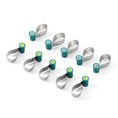


Hey there! As a supplier of orthodontic chewies, I've been getting a bunch of questions lately about whether there are different types of these little guys. Well, you bet there are! In this blog, I'm gonna break down the various types of orthodontic chewies, their uses, and how they can benefit both orthodontists and patients.
Let's start with the basics. Orthodontic chewies are small, soft, and usually made of silicone or rubber. They're designed to be chewed on by patients who are wearing braces or other orthodontic appliances. The main purpose of these chewies is to help seat the brackets and wires properly, which can speed up the alignment process and make the treatment more effective. You can check out our range of Orthodontic Chewies on our website.
Different Shapes and Sizes
One of the most obvious differences between orthodontic chewies is their shape and size. There are several common shapes available in the market, each with its own unique benefits.
- Cylindrical Chewies: These are the most traditional type of orthodontic chewies. They're long and tube-shaped, making them easy to hold and chew on. Cylindrical chewies are great for patients of all ages, as they're simple to use and can reach all areas of the mouth.
- Block Chewies: Block chewies are square or rectangular in shape and are usually larger than cylindrical chewies. They provide a larger surface area for chewing, which can be beneficial for patients who need more pressure to seat their brackets and wires. Block chewies are also a good option for patients with larger mouths or those who prefer a more substantial chewing experience.
- Ball Chewies: Ball chewies are round and small, making them perfect for targeting specific areas of the mouth. They're great for patients who have trouble reaching certain teeth or for those who need to apply more pressure to a particular bracket or wire. Ball chewies are also easy to carry around, as they can fit in a pocket or purse.
In addition to different shapes, orthodontic chewies also come in various sizes. The size of the chewie you choose will depend on your personal preference and the size of your mouth. It's important to choose a chewie that's comfortable to chew on and that can reach all areas of your mouth.
Different Textures
Another important factor to consider when choosing an orthodontic chewie is its texture. The texture of the chewie can affect how it feels in your mouth and how effective it is at seating your brackets and wires.
- Smooth Chewies: Smooth chewies have a soft and slippery texture, which makes them easy to chew on and comfortable to hold. They're a good option for patients who have sensitive teeth or gums, as they don't put too much pressure on the mouth. Smooth chewies are also great for patients who are new to wearing braces, as they're gentle on the teeth and gums.
- Ribbed Chewies: Ribbed chewies have a textured surface with small ridges or bumps. These ridges help to massage the gums and stimulate blood flow, which can promote healing and reduce discomfort. Ribbed chewies are also more effective at seating brackets and wires than smooth chewies, as the ridges provide more friction and pressure.
- Spiked Chewies: Spiked chewies have small spikes or protrusions on their surface. These spikes are designed to grip the brackets and wires, which can help to seat them more securely. Spiked chewies are a good option for patients who have stubborn brackets or wires that won't stay in place. However, they can be a bit more abrasive than other types of chewies, so they may not be suitable for patients with sensitive teeth or gums.
Different Flavors
Believe it or not, orthodontic chewies also come in different flavors! While the flavor of the chewie doesn't affect its effectiveness, it can make the chewing experience more enjoyable.


- Fruit Flavors: Fruit flavors are the most popular type of flavor for orthodontic chewies. They come in a variety of flavors, such as strawberry, cherry, lemon, and orange. Fruit flavors are refreshing and can help to mask the taste of the braces or other orthodontic appliances.
- Mint Flavors: Mint flavors are another popular option for orthodontic chewies. They have a fresh and cooling taste, which can help to freshen your breath and reduce discomfort. Mint flavors are also a good option for patients who prefer a more subtle flavor.
- Other Flavors: In addition to fruit and mint flavors, there are also other flavors available for orthodontic chewies, such as chocolate, vanilla, and bubblegum. These flavors are less common, but they can be a fun and unique way to make the chewing experience more enjoyable.
Benefits of Using Orthodontic Chewies
Now that you know about the different types of orthodontic chewies, let's talk about the benefits of using them.
- Speeds Up the Alignment Process: By helping to seat the brackets and wires properly, orthodontic chewies can speed up the alignment process and reduce the overall treatment time. This means that you can achieve your desired smile faster and with less discomfort.
- Reduces Discomfort: Wearing braces can be uncomfortable, especially in the beginning. Orthodontic chewies can help to reduce discomfort by massaging the gums and stimulating blood flow. They can also help to relieve pressure on the teeth and jaws, which can make wearing braces more tolerable.
- Improves Oral Hygiene: Orthodontic chewies can also help to improve oral hygiene by removing food particles and plaque from the teeth and gums. By chewing on a chewie after meals, you can help to keep your mouth clean and healthy.
- Enhances the Effectiveness of the Braces: When the brackets and wires are properly seated, the braces can work more effectively to move the teeth into the correct position. Orthodontic chewies can help to ensure that the brackets and wires are in the right place, which can improve the overall effectiveness of the treatment.
How to Use Orthodontic Chewies
Using orthodontic chewies is easy! Here's a step-by-step guide on how to use them:
- Wash your hands thoroughly before handling the chewie.
- Place the chewie between your teeth, making sure that it covers the brackets and wires.
- Bite down gently on the chewie and hold it in place for a few seconds.
- Roll the chewie around in your mouth, using your tongue to move it to different areas of the teeth.
- Repeat steps 3 and 4 several times, making sure to cover all areas of the mouth.
- After using the chewie, rinse it with water and store it in a clean, dry place.
It's important to use the chewie regularly, as directed by your orthodontist. Most orthodontists recommend using the chewie for at least 10-15 minutes a day, divided into several short sessions.
Conclusion
So, there you have it! There are definitely different types of orthodontic chewies available, each with its own unique benefits. Whether you're looking for a specific shape, texture, or flavor, there's an orthodontic chewie out there for you.
If you're interested in purchasing orthodontic chewies or other orthodontic products, we'd love to hear from you. We're a leading supplier of high-quality orthodontic products, and we're committed to providing our customers with the best possible service and support. Just reach out to us, and we can start a conversation about your needs and how we can help you.
References
- American Association of Orthodontists. (n.d.). Orthodontic Chewies. Retrieved from [Website URL]
- British Orthodontic Society. (n.d.). Orthodontic Treatment - Frequently Asked Questions. Retrieved from [Website URL]
- National Institute of Dental and Craniofacial Research. (n.d.). Oral Health Information. Retrieved from [Website URL]